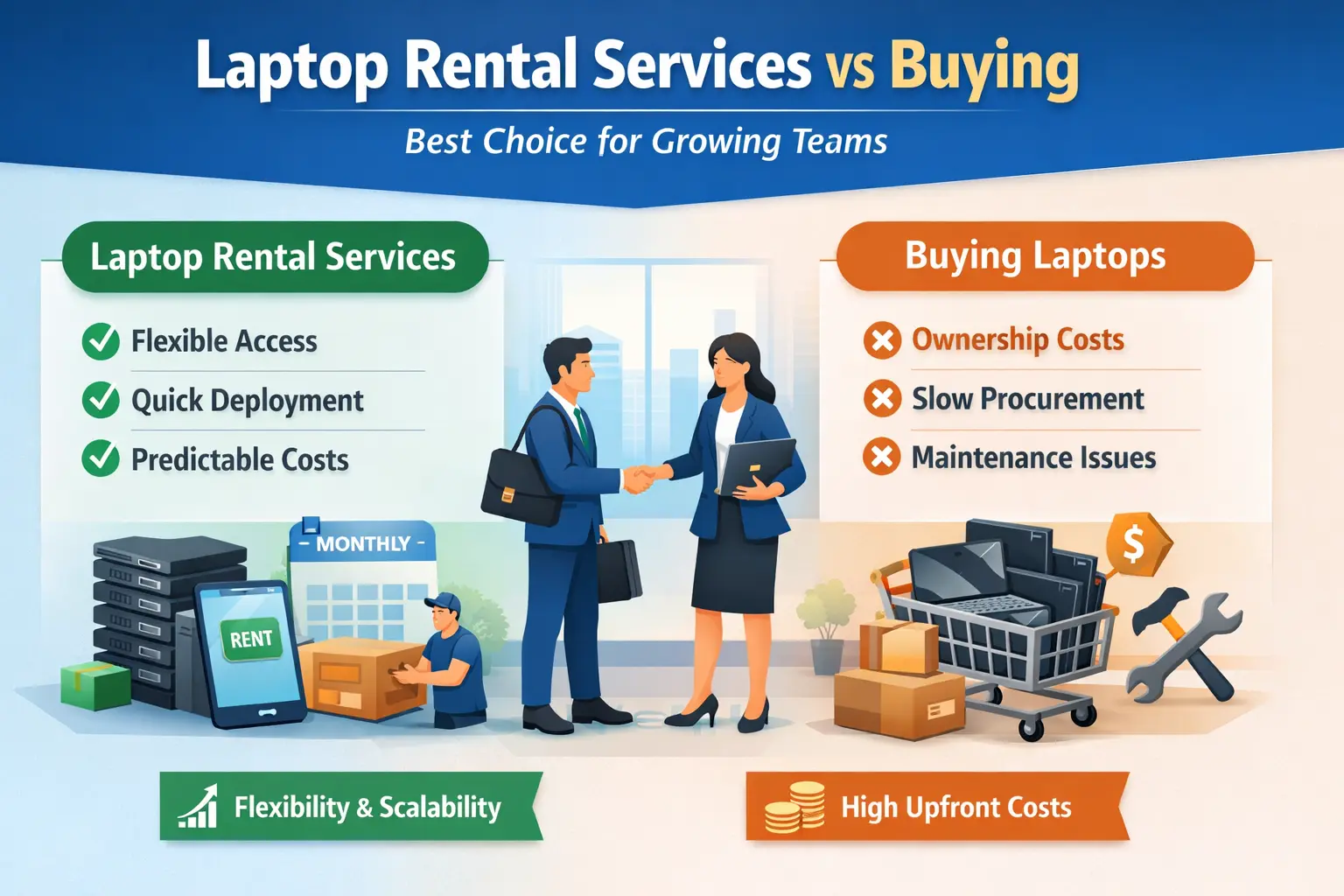
Short-term projects run on tight timelines. Teams form fast. Priorities are clear. The work must start on day one, not day ten. Hardware delays break schedules in a way that spreadsheets cannot show.
Devices also create clutter after the project ends. Laptops sit in cupboards. Desktops get stacked in stores. Nobody wants to own that mess. Laptop and desktop rentals solve the problem by matching devices to the project window.
Projects Create Sudden Demand
Projects create spikes in headcount. A new client engagement begins. A seasonal campaign starts. A site rollout needs extra hands. The demand is real, but it is temporary.
Buying hardware for temporary demand forces permanent decisions. Someone must choose models, storage, RAM, and warranty levels. Those choices stay long after the project finishes.
Laptop and desktop rentals keep the commitment short. You take what you need. You return what you no longer need.
Kickoff Speed Matters
Project teams need access on day one. They need working machines, not purchase orders.
Rental inventory is built for fast dispatch. Devices can arrive pre-set with the right operating system and baseline settings. That reduces setup time for managers and IT teams.
Laptop and desktop rentals help projects start cleanly, with fewer delays at the most fragile stage of delivery.
Procurement Cycles Do Not Fit Project Timelines
Procurement works well for stable plans. It struggles with short cycles.
Approvals take time. Vendor stock fluctuates. The configuration adds more waiting. Short projects do not have that patience.
Laptop and desktop rentals remove most of this friction.
Short-Term Teams Often Include External Staff
Projects frequently use contractors, freelancers, and consultants. They need devices that can be issued quickly and recovered reliably.
Issuing owned devices to short-term staff creates tracking risk. Recovering devices becomes a chase. Offboarding steps get skipped when deadlines are near.
Laptop and desktop rentals come with clear return processes. Devices are collected when contracts end. This supports cleaner offboarding.
Standard Builds Reduce Confusion
Temporary teams work best with consistent setups. Mixed hardware creates small problems that waste time.
Different keyboards and ports affect peripherals. Different OS builds affect tools. Different performance levels create unfair bottlenecks inside the same team.
Laptop and desktop rentals support standard builds across a project. Teams share the same baseline. Collaboration becomes smoother.
Costs Stay Attached to the Project
Short-term projects need clear cost attribution. Expenses should map to the project period.
Buying devices pushes the cost upfront, even if the hardware will be idle later. That makes project budgets harder to compare and harder to defend.
Laptop and desktop rentals spread costs across usage. When the project ends, the expense ends too. That keeps reporting clean.
Avoiding Idle Assets After Delivery
Unused hardware is not free. It needs storage. It needs tracking. It loses value. It becomes outdated.
Many businesses plan to redeploy devices, then fail to do it. The asset list grows, but the benefit does not.
Laptop and desktop rentals prevent idle assets.
Fast Scaling Up and Down
Project scope changes. Timelines shift. Teams expand for testing, training, or support.
Buying devices mid-project can slow response. Rental models allow quicker adjustment. Extra devices can be added for a short burst, then returned.
Laptop and desktop rentals fit this flexible staffing pattern.
Maintenance and Replacement Are Built In
Device failures hit harder in short projects. There is no buffer.
With owned devices, repairs take time. Warranty processes can be slow. Teams share machines while waiting.
Rental providers typically replace faulty devices quickly. The focus stays on delivery, not on repair status updates.
Laptop and desktop rentals reduce downtime risk during critical phases.
Security and Data Hygiene During Turnover
Projects have frequent joins and exits. Each transition increases data exposure.
Devices can carry client files, credentials, and internal documents. A rushed offboarding can leave data behind.
Laptop and desktop rentals support better hygiene through structured return and reset processes. Devices are wiped before reuse. That reduces exposure during high churn.
Device Tracking Without Spreadsheets
Asset tracking becomes messy in project environments. Who has which device? When it was issued. Where is it located? When it must be returned.
Many teams try to manage this in spreadsheets. Accuracy drops quickly.
Laptop and desktop rentals often come with clear asset lists and issue records. Visibility improves without manual tracking.
Support Load Does Not Crush Internal IT
Short projects create support spikes. More users mean more tickets. More devices mean more configuration.
Internal IT teams rarely have extra capacity for temporary peaks. Support quality drops across the organisation.
Rental providers can handle provisioning, swaps, and first-level troubleshooting. Internal teams stay focused on core systems.
Laptop and desktop rentals reduce the support burden that projects often create.
Peripherals and Workstation Needs
Short projects are not always laptop-only. Some teams need desktops for fixed desks. Some need dual monitors, docks, or extra storage.
Buying peripherals for short use increases clutter. It also increases compatibility issues when devices vary.
Laptop and desktop rentals can be paired with the right peripheral kit. That keeps setups consistent for the duration of the work.
Multi-Location Projects and Site Delivery
Projects may run across cities, branches, or client sites. Shipping owned devices between locations adds delay and handling risk.
Rental dispatch can be aligned to sites. Devices can be delivered where work happens.
Laptop and desktop rentals support distributed execution without extra logistics work for operations teams.
Software Readiness Without Long Setup
Many projects depend on specific tools. CRM access, development stacks, design software, VPN, endpoint protection. Installing and configuring these across many devices takes time.
With rentals, a standard image can be applied to the project. Devices can arrive with required agents and policies. The team spends less time on setup and more time on work.
Risk Control During Travel and Field Work
Some projects involve travel, field surveys, events, or temporary offices. Devices move more. Damage risk is higher.
Owning devices makes each incident a direct capital loss and a procurement problem. Rental terms often include clear handling for damage and quick replacement. The project stays on track.
Clean Closeout at the End
Project closure has many tasks. Access must be removed. Data must be archived. Devices must be collected.
Laptop and desktop rentals simplify closeout. Returns are scheduled. Devices are checked in. The project ends without leftover hardware and without weeks of follow-up.
When Buying May Still Be Better
Some roles are permanent and stable. Some teams need specialised machines that are hard to source on rent. In such cases, buying can make sense.
Short-term project work is different. It values speed, flexibility, and clean closure.
Laptop and desktop rentals match that lifecycle. Devices arrive with the team. Devices leave when the work ends. That keeps the business lean while projects move fast.
Frequently asked questions (FAQs)
Laptop and desktop rentals allow businesses to meet temporary hardware needs without making long-term purchase commitments, making them ideal for project-based teams.
Yes, rented devices can be quickly issued to contractors, freelancers, and consultants and easily returned once the project ends.
Yes, rental solutions make it easy to scale teams up or down as project requirements change without delays in procurement.
With laptop and desktop rentals, devices are returned after project completion, preventing idle hardware from occupying storage or losing value.
Yes, rental devices can be delivered across project sites, supporting distributed teams without complex logistics.