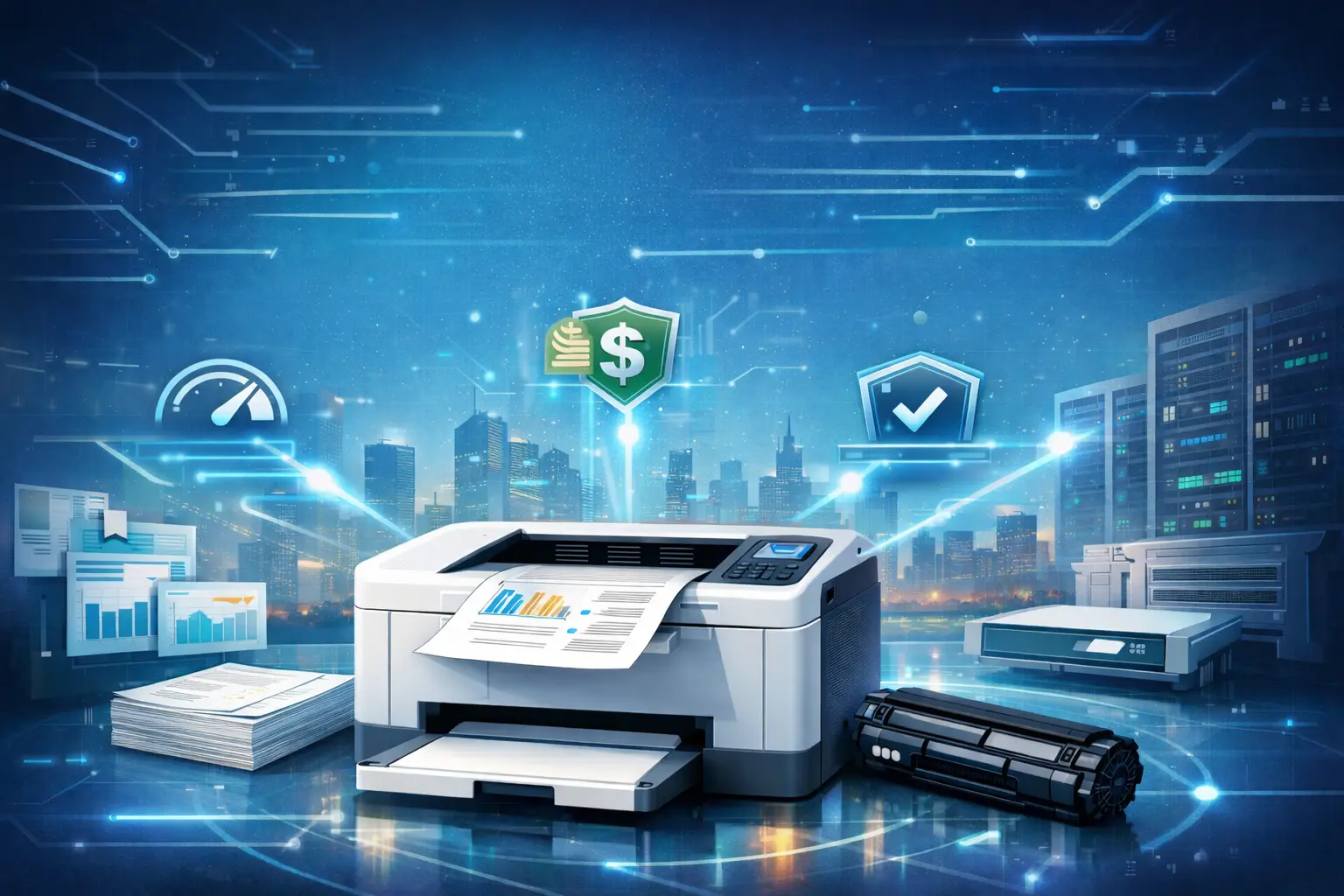
Printing still sits at the centre of office operations, and in most enterprises, the laserjet printer remains the backbone of that system. Contracts move from draft to signature. Invoices move from the system to the file. Compliance records are reviewed, approved, and stored. Shipping labels leave buildings with products. These actions happen every day.
Digital systems support these processes, but they do not replace them fully. Paper remains part of how work is completed. Because of this, printing is expected to be stable. It should not demand attention. It should not fail at the wrong time.
This expectation explains why the laserjet printer remains common in enterprise environments.
Printing Is Treated as Infrastructure
In offices, printers are not evaluated like software tools. No one expects innovation from them. What matters is reliability.
When printing works, it is invisible. When it does not, work stops. People wait. Processes pause. Laser printers fit this mindset well. They are built to operate without frequent adjustment or monitoring, especially when supported by structured systems like Managed Print Services.
This makes the laserjet printer suitable for environments where printing is shared and unmanaged by design.
How Laser Printing Changes Day-to-Day Behaviour
A laserjet printer uses toner, not liquid ink. Toner is fixed onto paper using heat. A laser controls placement.
This affects daily use in practical ways. Pages do not smear. Output looks the same in the morning and late evening. The printer does not behave differently after sitting idle.
In offices where usage is uneven, this predictability reduces minor interruptions that otherwise pile up.
Designed for Volume, Not Occasional Use
Enterprise printers are expected to handle a load. Print jobs arrive in groups. Activity spikes before meetings, audits, and dispatch cycles.
Laser printers are designed with this reality in mind and are commonly deployed through structured business printing services. They support higher monthly volumes. They are less affected by sudden demand. They do not rely on regular cleaning cycles to stay functional.
This allows the laserjet printer to absorb pressure without slowing work.
Queues Matter More Than Speed Ratings
Speed is rarely discussed in isolation. What matters is whether people have to wait.
When printers are slow, queues form. Approvals stall. Meetings start late. Laser printers maintain pace across long jobs. They do not slow down midway.
They also start quickly. When a document is needed immediately, this matters more than maximum page-per-minute figures.
Text Is the Primary Output
Most office printing involves text. Contracts. Forms. Reports. Policies. Tables and numbers.
Laser printing is optimised for this. Text appears sharp. Alignment holds. Diagrams remain readable. Output stays consistent across copies.
The laserjet printer supports document-heavy workflows without needing manual correction or reprints.
Appearance Is Secondary to Accuracy
Colour reproduction matters in design teams. In most offices, it does not.
What matters is whether a number can be read correctly. Whether a signature line prints clearly. Whether a scanned copy remains legible.
Laser printers prioritise accuracy. This matches how business documents are used.
Costs Are Judged Over Years
Enterprises do not judge printers by purchase price alone. They look at how the device behaves over time.
Laser printers often cost more initially. Operating costs tend to stabilise. Toner lasts longer. Replacements are predictable. Failures are less frequent.
For organisations with regular printing needs, this consistency simplifies planning and aligns well with long-term device management strategies offered through enterprise printing solutions.
Multiple Devices Create Complexity
Offices with many printers face coordination issues. Different models require different supplies. Maintenance knowledge fragments.
Standardising around laser printers reduces this complexity. Supply management becomes simpler. Support processes align.
This is one reason the laserjet printer remains common in larger environments.
Shared Printers Need Stability
Shared printers serve many people. A failure affects more than one role.
Laser printers handle shared demand without instability. Print queues move steadily. Output quality does not fluctuate under load.
This reduces escalation and avoids constant troubleshooting.
Printed Documents Carry Risk
Printed pages often contain sensitive information. Financial data. Employee records. Contracts.
Many enterprise-grade laser printers support secure release and user tracking as part of broader print security solutions. Documents are collected intentionally, not left unattended.
A laserjet printer with these controls fits offices where document handling matters.
Downtime Disrupts Quietly
Printer downtime does not always look dramatic. It looks like waiting.
People stand by machines. Tasks pause. Temporary fixes appear. These delays rarely get recorded.
Laser printers face fewer everyday failures. Toner does not dry out. Components are designed for sustained use. Replacement tasks are straightforward.
This keeps work moving without drawing attention.
Paper Still Connects to Digital Systems
Documents move between formats. A contract is printed, signed, scanned, and archived.
Many laser printers combine printing, scanning, and copying as part of integrated workplace systems offered under managed print environments. This allows documents to move without device switching.
The laserjet printer fits this hybrid flow naturally.
Where Laser Printing Is Less Suitable
Some teams need high colour fidelity. Marketing and design work often falls here.
Laser printing is not built for this use. Inkjet printers suit these cases better.
These scenarios are specific. Most offices do not operate this way.
Why the Preference Remains
Enterprises keep technologies that behave predictably. Tools that cause friction are replaced.
The laserjet printer continues to meet expectations around stability, workload handling, cost control, and shared use.
It does not demand attention. It supports working quietly. That is why it remains a fixture in enterprise offices.
Frequently asked questions (FAQs)
A laserjet printer is preferred because it offers consistent performance, handles high-volume printing, and requires less frequent maintenance compared to ink-based printers. This makes it suitable for shared office environments where reliability is critical.
For most office workflows, a laserjet printer is more suitable as it delivers sharp text output, faster performance for bulk printing, and predictable operating costs over time.
Laserjet printers are designed with higher duty cycles and use toner technology that allows them to manage heavy workloads without frequent cleaning or interruptions.
Many enterprise-grade laserjet printers include features like secure print release and user authentication, helping organisations manage sensitive documents safely.
Although the initial cost may be higher, a laserjet printer typically offers lower long-term operational costs due to longer-lasting toner and fewer maintenance requirements.