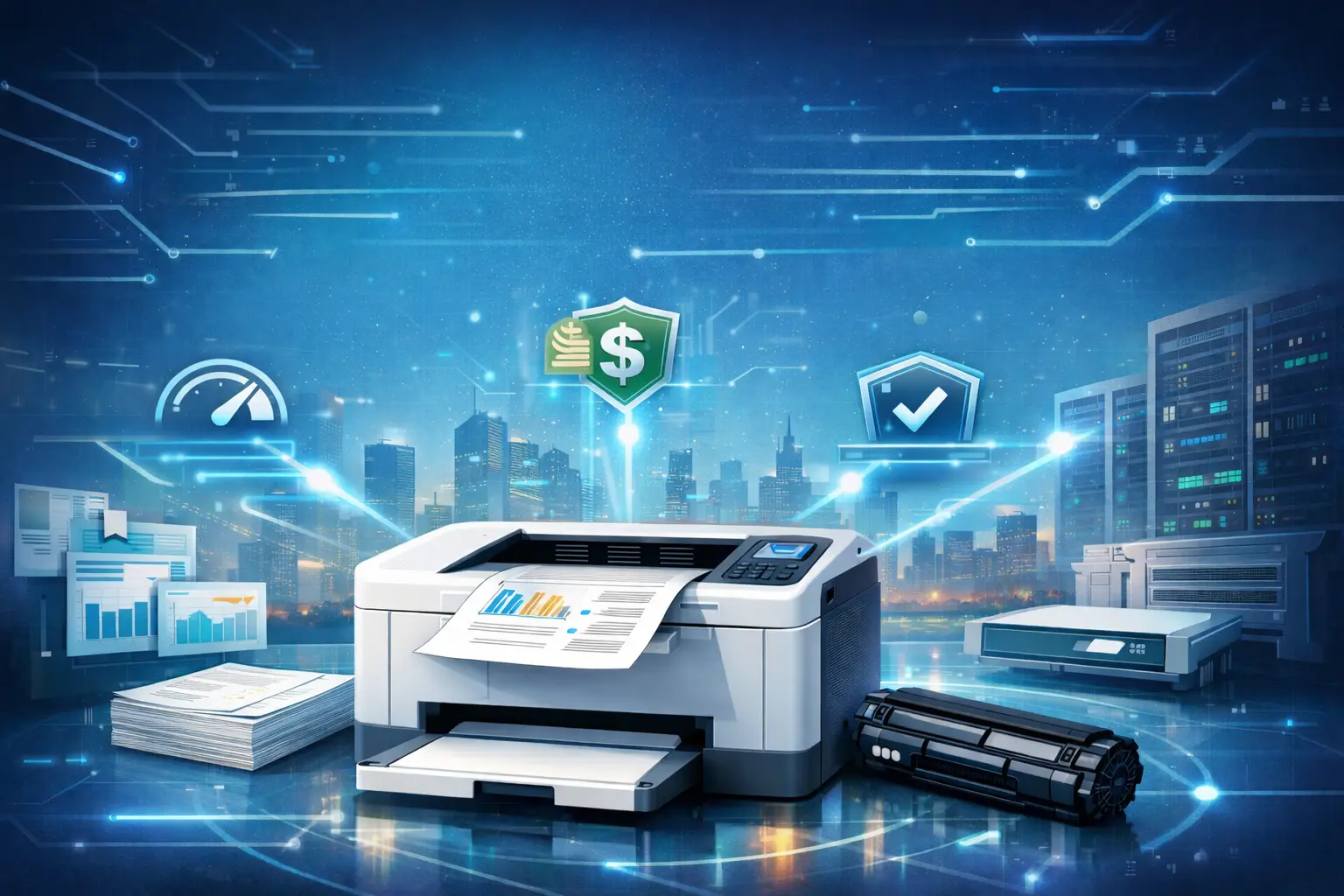
Managed print services for small businesses help make printing part of daily work in most small businesses. Invoices are printed for billing. Contracts are printed for signing. Shipping labels, compliance forms, and internal records pass through printers every day. These activities support operations even when they are not discussed openly.
In many small businesses, printing grows without planning. A printer is added when one breaks. Supplies are ordered when someone notices they are low. Repairs are handled only after work stops. Over time, this creates friction.
This is where managed print services for small businesses begin to matter.
Printing Is Rarely Owned by One Role
In small organisations, no single person owns printing. IT may not exist as a dedicated function. Operations teams are busy with delivery. Finance focuses on billing and cash flow.
As a result, printing sits in between roles. Decisions are reactive. Problems are solved temporarily. Costs stay hidden.
Managed print services for small businesses address this gap by assigning responsibility without adding internal workload.
What Managed Print Services Actually Change
Managed print services do not change why businesses print. They change how printing is managed.
A service provider reviews the existing print setup. Devices, usage patterns, and document flows are examined. From there, printers, supplies, and maintenance are managed as one system.
For small businesses, this replaces fragmented decisions with a single operating model.
Predictability Matters More Than Savings
Small businesses often focus on reducing costs. Printing, however, benefits more from predictability than from short-term savings.
Managed print services for small businesses replace irregular spending with planned costs. Supplies arrive before they run out. Maintenance is handled before breakdowns occur. Emergency purchases reduce over time.
This stability supports budgeting and avoids disruption.
Printers Often Do Not Match Usage
In many offices, printers are either overworked or underused. A single device may handle too many jobs. Another may sit idle but still require supplies.
Managed print services start with understanding actual usage. Printers are placed where demand exists. Devices that cannot handle volume are replaced. Unnecessary printers are removed.
This alignment improves reliability without adding complexity.
Downtime Has a Larger Impact in Small Teams
When a printer fails in a small business, work stops immediately. There is no backup device. There is no support desk. Someone has to figure it out.
Managed print services reduce this risk through monitoring and proactive support. Issues are identified early. Supplies are replenished automatically. Failures become less frequent.
This keeps teams focused on their work.
Supply Management Is a Repeating Burden
Ordering toner and consumables takes time. It also creates risk. Orders may be late. Incorrect supplies may arrive. Stock may run out during peak work.
MPS for small businesses remove this task entirely. Usage is tracked. Supplies are delivered based on need, not guesswork.
This frees up time and reduces errors.
Shared Printers Need Balance
Most small businesses rely on shared printers. Finance, operations, and customer support use the same device.
Managed print services ensure shared printers are suited to this demand. Devices are selected based on workload. Queues are managed properly. Performance remains stable during busy periods.
This prevents friction between teams.
Printing and Data Exposure
Small businesses handle sensitive information. Customer records. Financial data. Employee documents.
Printed pages can expose data if left unattended or collected by the wrong person. Managed print services for small businesses often include basic controls. Print jobs can be released securely. Usage can be tracked.
These controls improve data handling without creating extra steps for staff.
Reducing Dependence on Internal Fixes
When printers break, small businesses rely on improvised solutions. Staff search online. Vendors are called randomly. Temporary fixes are applied.
Managed print services replace this with consistent support. The service provider handles repairs, replacements, and escalation. Internal teams do not need to intervene.
This reduces distraction and stress.
Growth Changes Printing Needs
As businesses grow, printing volume increases. More employees join. More documents flow through systems.
A setup that worked for ten people may fail at thirty. Managed print services scale with growth. Devices are upgraded or added as demand increases.
This avoids repeated redesign of the print environment.
Avoiding Long-Term Fragmentation
Over time, unmanaged printing environments become fragmented. Different brands. Different models. Different supplies.
Managed print services bring structure. Standardisation improves support, supply management, and reliability.
This reduces operational risk over the long term.
When Managed Print Services Are Not Necessary
Very small offices with minimal printing may not need managed services. If printing is rare and non-critical, the overhead may not be justified.
For most growing businesses, printing is regular and operationally important. In these cases, managed print services for small businesses offer clear benefits.
Cost Control Without Compromise
Managed print services do not cut corners. They remove inefficiencies.
By bringing visibility, structure, and proactive support, managed print services for small businesses help control printing costs without reducing reliability or performance.
Printing becomes stable. Costs become predictable. Teams stay focused on their core work.
That balance is what makes managed print services valuable for small businesses.
Frequently Asked Questions (FAQs)
MPS outsources full management of your printing—devices, supplies, maintenance, repairs, and security—to a provider, creating a predictable, efficient system without adding internal work.
They replace surprise expenses with fixed monthly/per-page pricing, optimize your fleet to cut waste, automate supplies, and provide proactive fixes—often saving 20-30% while ensuring reliable, high-quality printing.
No—it’s ideal for small teams with regular printing needs. It scales easily, eliminates hidden hassles, and saves time/stress even with modest volumes.
Yes—providers monitor remotely, deliver supplies automatically, and fix issues before they happen, preventing work stoppages in small offices with no backups.
Usage is tracked in real-time; correct toner/paper is shipped automatically before you run out—no rush orders, wrong items, or shortages.
Yes—features like secure release (authenticate to print), tracking, and updates protect sensitive data from exposure, especially useful for customer/financial records.
It scales seamlessly—providers upgrade/add devices and adjust as your team or volume grows, avoiding outdated setups or repeated redesigns.
No—the provider manages all repairs, support, and often standardises equipment for simpler, faster fixes and fewer issues.
It varies by volume/devices, but typically a predictable monthly fee covers everything (supplies, maintenance, support)—no surprises, often with quick ROI through savings.
If printing is very rare and non-critical (e.g., tiny office with occasional use), it might be overkill—but for most small businesses where printing supports daily operations, it delivers clear value in stability and efficiency.